This page uses the site's newer layout, so only the problem statement and the section outline survive in the public payload — open the original for the rest.
Course
Practicing
A progressive practice plan from solo recording to AI tools to peer mocks to professional coaching, with scripts and exercises to build interview confidence.
Premium video
Sign in & purchase Premium to watch the full video.
Once you have a story catalog and you've learned to decode questions and select the right responses, the step that will really make a difference is practicing. In the moment, in the interview, there can be a lot of cognitive load to select the right details, organize them, adapt to the interviewer's reactions, all while trying to sound natural. Practice helps you close the gap between what you mean to communicate and what actually comes out under pressure.
Some candidates fear this kind of practice will make them sound robotic or rehearsed. If you do it right, by drilling the key points to get across instead of exactly what to say, it won't. Instead it will instill confidence.
Progressive Practice
The key to efficient preparation is progressive practice: start with controlled, low-pressure environments where you can focus purely on content and structure, then gradually introduce the complexity and pressure of real interview conditions.
- Practice by yourself : Get your core stories and basic delivery down in private
- Practice with AI : Test yourself with unpredictable questions and get immediate feedback
- Practice with peer mock interviewers : Experience real conversation dynamics and human feedback
- Polish with professional mock interviewers : Calibrate against experts in company expectations
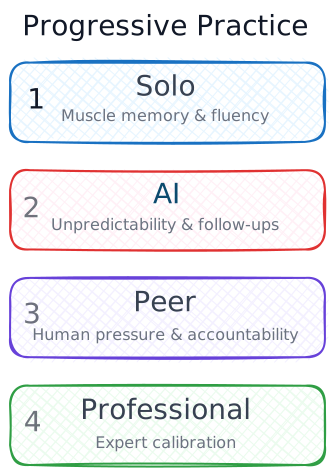
Progressive Practice
Each stage serves a purpose, and skipping stages tends to waste both time and money.